What Does It Mean When You Feel Dizzy and Funny in the Top of Our Head
Dizziness is an inexact term people oft apply to describe diverse related sensations, including
-
Faintness (feeling about to pass out)
-
Light-headedness
-
Dysequilibrium (feeling off rest or unsteady)
-
A vague spaced-out or swimmy-headed feeling
-
Vertigo (a sensation of movement when there is no actual movement)
Vertigo is a blazon of dizziness felt as a sensation of movement when there is no actual move. People usually feel that they, their environs, or both are spinning. The feeling is like to that produced past the childhood game of spinning round and round, then suddenly stopping and feeling the surroundings spin. Occasionally, people only feel pulled to one side. Vertigo is not a diagnosis. It is a description of a sensation.
People with vertigo may also accept nausea and vomiting, difficulty with residue, and/or trouble walking. Some people have a rhythmic jerking movement of the eyes (nystagmus) during an episode of vertigo.
Different people frequently apply the terms "dizziness" and "vertigo" differently, perhaps because these sensations are hard to describe in words. Also, people may draw their sensations differently at unlike times. For example, the sensations might feel like light-headedness one time and similar vertigo the next.
However it is described, these sensations can be agonizing and fifty-fifty incapacitating, specially when accompanied past nausea and vomiting. Symptoms crusade particular problems for people doing an exacting or unsafe task, such equally driving, flying, or operating heavy machinery.
Dizziness accounts for about five to 6% of doctor visits. It may occur at whatever age but becomes more than mutual as people historic period. It affects about forty% of people older than twoscore at some fourth dimension. Dizziness may be temporary or chronic. Dizziness is considered chronic if it lasts more than a month. Chronic dizziness is more than common amongst older people.
Vertigo is usually caused past disorders of the parts of the ear and brain that are involved in maintaining residual:
-
Brain stalk and cerebellum
-
Nerve tracts connecting the inner ear to the encephalon stem and cerebellum
A Look Inside the Ear
Although there is some overlap, causes of dizziness tin roughly be divided into those with and without vertigo.
The near common causes of dizziness with vertigo include the following:
-
Vestibular migraine headache
The most common causes of dizziness without vertigo include the following:
-
Drug effects
-
Multifactorial causes
Several kinds of drugs can cause dizziness. Some drugs are directly toxic to the nerves of the ears and/or residue organs ( ototoxic drugs Ear Disorders Acquired past Drugs Many drugs can impairment the ears (ototoxic drugs). Some ototoxic drugs include the antibiotics streptomycin, tobramycin, gentamicin, neomycin, and vancomycin, certain chemotherapy drugs (for example... read more ). These drugs tend to cause dizziness and an inability to focus on a visual target (oscillopsia). Other drugs, for example, sedatives, bear upon the brain as a whole. In older people, dizziness frequently is due to several factors, ordinarily a combination of drug side furnishings plus an age-related decrease in sensory function.
Dizziness without vertigo may occur when the encephalon receives bereft oxygen and glucose, such equally may be related to nonneurologic disorders including heart and lung disorders or astringent anemia.
Very often, no particular cause is constitute, and symptoms go away without treatment.
Less mutual causes of dizziness include a tumor of the vestibulocochlear nervus ( vestibular schwannoma Vestibular Schwannoma A vestibular schwannoma (also known as an acoustic neuroma) is a noncancerous (benign) tumor that originates in the cells that wrap around the vestibular nerve (Schwann cells). These tumors... read more  ); a tumor Overview of Brain Tumors A brain tumor can be a noncancerous (benign) or cancerous (malignant) growth in the brain. It may originate in the brain or have spread (metastasized) to the brain from another part of the body... read more , stroke Overview of Stroke A stroke occurs when an artery to the brain becomes blocked or ruptures, resulting in death of an area of brain tissue due to loss of its claret supply (cerebral infarction) and symptoms that... read more , or transient ischemic assault ( TIA Transient Ischemic Attacks (TIAs) A transient ischemic assail (TIA) is a disturbance in brain function that typically lasts less than 1 hour and results from a temporary blockage of the brain's blood supply. The cause and symptoms... read more ) affecting the encephalon stem; an injury to the eardrum, inner ear, or base of the skull; multiple sclerosis Multiple Sclerosis (MS) In multiple sclerosis, patches of myelin (the substance that covers most nervus fibers) and underlying nerve fibers in the encephalon, optic nerves, and spinal cord are damaged or destroyed. The cause... read more ; low blood sugar Hypoglycemia Hypoglycemia is abnormally low levels of carbohydrate (glucose) in the claret. Hypoglycemia is about often acquired by drugs taken to control diabetes. Much less common causes of hypoglycemia include other... read more than ; and pregnancy Physical Changes During Pregnancy Pregnancy causes many changes in a adult female'south body. Well-nigh of them disappear afterwards delivery. These changes cause some symptoms, which are normal. Nevertheless, sure disorders, such every bit gestational diabetes... read more
  .
.
The following information tin help people with dizziness make up one's mind whether a dr.'south evaluation is needed and assist them know what to wait during the evaluation.
In people with dizziness, sure symptoms and characteristics are cause for concern. They include
-
Headache
-
Neck pain
-
Difficulty walking
-
Loss of consciousness (fainting)
-
Other neurologic symptoms (such as trouble hearing, seeing, speaking, or swallowing or difficulty moving an arm or leg)
People who accept warning signs, those whose symptoms are severe or have been continuous for over an hour, and those with vomiting should become to a hospital right abroad. Other people should come across their doctor as soon as possible. People who had a single, brief (less than 1 minute), balmy episode with no other symptoms may choose to wait and come across whether they take another episode.
In people with dizziness, doctors commencement ask questions virtually the person's symptoms and medical history. Doctors then do a concrete examination. What they find during the history and concrete examination oftentimes suggests a cause of the dizziness and the tests that may demand to be washed (come across table Some Causes and Features of Dizziness Some Causes and Features of Dizziness  ).
).
In addition to warning signs, important features that doctors ask nigh include severity of the symptoms (has the person fallen or missed work), presence of vomiting and/or ringing in the ears, whether symptoms come up and go or have been continuous, and possible triggers of the symptoms (for example, changing position of the head or taking a new drug).
During the physical exam, the ear, heart, and neurologic examinations are particularly important. Hearing is tested, and the ears are examined for abnormalities of the ear canal and eardrum. The eyes are checked for abnormal movements, such every bit nystagmus.
Nystagmus suggests a disorder affecting the inner ear or various nerve connections in the encephalon stem. With nystagmus, the eyes apace and repeatedly jerk in one management and then return more slowly to their original position. Doctors deliberately try to trigger nystagmus if people practise not have it spontaneously because the direction in which the optics move and how long the nystagmus lasts help doctors diagnose the cause of vertigo. To trigger nystagmus, doctors starting time lay people on their back and gently roll them from side to side while watching their eyes. Specialists sometimes take the person wear thick, one-way, magnifying glasses called Frenzel lenses. Doctors can easily see the person'southward magnified eyes through the lenses, just the person sees a blur and cannot visually fixate on anything (visual fixation makes it harder to trigger nystagmus). During the maneuver to induce nystagmus, center movements may be recorded by using electrodes (sensors that stick to the skin) placed effectually each eye (electronystagmography) or by a video photographic camera attached to the Frenzel lenses (video electronystagmography). If no nystagmus occurs with rolling side to side, doctors endeavour other maneuvers. These other maneuvers include putting ice-cold water into the ear canal (caloric testing) and chop-chop changing the position of the person'due south head ( Dix-Hallpike maneuver Benign Paroxysmal Positional Vertigo Benign paroxysmal positional vertigo, or BPPV, is a common disorder causing brusque episodes of vertigo (a imitation sensation of moving or spinning) in response to changes in head position that stimulate... read more 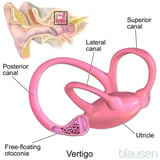 ).
).
Doctors likewise practice a complete neurologic examination, paying detail attention to tests of walking, balance, and coordination.

The need for tests in people with dizziness or vertigo depends on what doctors find during the history and physical examination, particularly whether warning signs are present.
For people with a sudden assault of dizziness that is still going on, doctors usually apply a fingertip oxygen sensor, measure out claret glucose from a driblet of blood from the fingertip. Some women get a pregnancy test.
People with alarm signs typically require gadolinium-enhanced magnetic resonance imaging (MRI), equally do people without warning signs who have had symptoms for a long time.
Comprehensive vestibular testing is sometimes done. This testing includes video electronystagmography (computerized recording and analysis of abnormal eye movements), rotary chair testing (looking for abnormal eye movements while sitting in a chair that is rotated), and vestibular-evoked myogenic potential testing. These tests are typically done by doctors who specialize in the care of the ear (otolaryngologists).
The cause of dizziness is treated whenever possible. Treatment includes stopping or reducing the dose of any drug that is the cause or switching to an alternative drug.
Nausea and vomiting can be treated with drugs such equally meclizine or promethazine.
Vertigo caused past disorders of the inner ear, such as Meniere illness Meniere Disease Meniere affliction is a disorder characterized past recurring attacks of disabling vertigo (a false sensation of moving or spinning), fluctuating hearing loss (in the lower frequencies), and racket... read more , labyrinthitis Purulent Labyrinthitis Purulent (suppurative) labyrinthitis is a bacterial infection of the inner ear that often causes deafness and loss of rest. The labyrinth is the bony crenel that contains the inner ear. The... read more , migraine associated vertigo, or vestibular neuronitis Vestibular Neuronitis Vestibular neuronitis is a disorder characterized past a sudden severe attack of vertigo (a simulated awareness of moving or spinning) caused by inflammation of the vestibular nerve, the branch of... read more , tin ofttimes be relieved by benzodiazepine drugs such equally diazepam or lorazepam. Antihistamine drugs such as meclizine are an alternative. Vertigo in people with benign paroxysmal positional vertigo Beneficial Paroxysmal Positional Vertigo Beneficial paroxysmal positional vertigo, or BPPV, is a common disorder causing short episodes of vertigo (a imitation awareness of moving or spinning) in response to changes in head position that stimulate... read more is treated with the Epley maneuver The Epley Maneuver: A Uncomplicated Cure for a Common Crusade of Vertigo  (a somersault-like maneuver of the caput) done by an experienced practitioner. Meniere disease Meniere Disease Meniere disease is a disorder characterized by recurring attacks of disabling vertigo (a false awareness of moving or spinning), fluctuating hearing loss (in the lower frequencies), and noise... read more is best managed past an otolaryngologist with training in management of this chronic disorder, but initial direction consists of a depression-table salt diet and a diuretic ("water pills"), which may not be effective in all people with the disorder. In people with vertigo that occurs with migraines, the migraine is treated.
If vertigo persists for a long time, some people do good from physical therapy to help them cope with their disturbed sense of rest. Therapists may likewise recommend such strategies as
-
Avoiding movements that may trigger dizziness, such equally looking up or angle down
-
Storing items at levels that are easy to reach
-
Getting upward slowly after sitting or lying downwards
-
Clenching hands and flexing feet before continuing
-
Learning exercises that combine eye, caput, and body movements to assistance prevent dizziness
-
Undergoing vestibular rehabilitation therapy (a specialized grade of physical therapy that targets symptoms of peripheral and central vestibular dysfunction)
Every bit people grow older, many factors brand dizziness and vertigo more common. The organs involved in balance, specially the structures of the inner ear, part less well. It becomes harder to encounter in dim low-cal. The body's mechanisms that control claret pressure respond more slowly (for instance, to standing up). Older people are also more likely to be taking drugs that can cause dizziness.
Although dizziness and vertigo are unpleasant at whatsoever age, they crusade particular problems for older people. Frail people have a much college risk of falling when they are silly. Even if they exercise not fall, their fear of falling often significantly affects their ability to do daily activities.
The drugs that help relieve vertigo can make people feel sleepy. This effect is more mutual and sometimes more severe in older people.
-
Dizziness and vertigo often consequence from disorders that touch the inner ear or the parts of the brain involved in balance or from employ of sure prescription drugs.
-
Symptoms may include faintness, loss of balance, vertigo, difficult-to-describe giddy or pond sensations, or a combination.
-
Severe headache and any sign of difficulty with brain function (such every bit difficulty walking, talking, seeing, speaking, or swallowing) are alarm signs, only fifty-fifty vague symptoms may result from a serious disorder.
-
People with warning signs should see a doctor right away, and they often require testing.
-
Drugs, such as diazepam or meclizine, often help relieve vertigo, and prochlorperazine tin can help relieve nausea.
Source: https://www.msdmanuals.com/home/ear,-nose,-and-throat-disorders/symptoms-of-ear-disorders/dizziness-and-vertigo

Post a Comment for "What Does It Mean When You Feel Dizzy and Funny in the Top of Our Head"